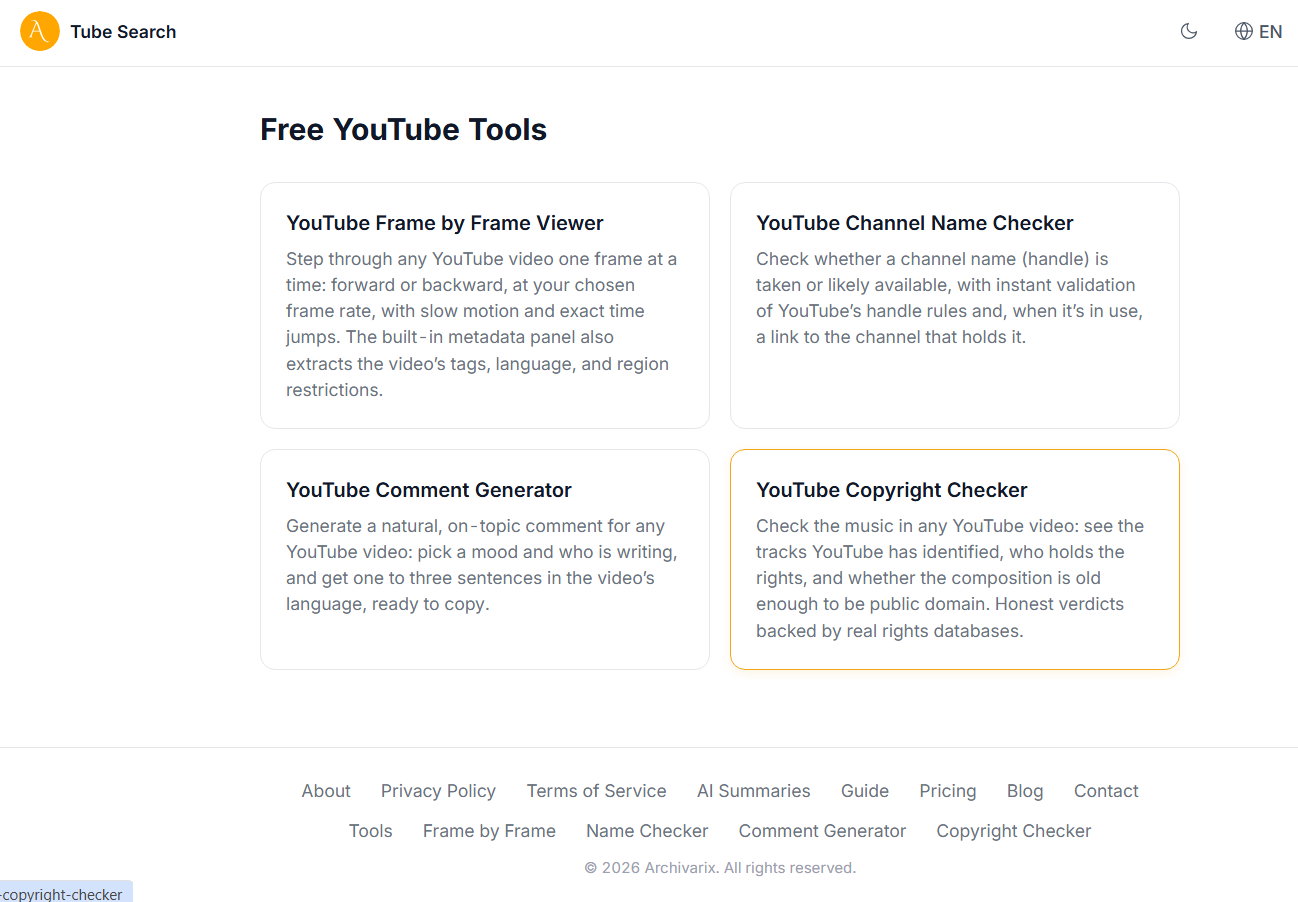
Free YouTube Tools on Tube Search: Frame by Frame Viewer, Tags, Name Checker and Copyright Checker
Tube Search now has a section of free YouTube tools. These are small utilities that solve specific everyday tasks: stepping through a video frame by frame, extracting hidden tags, checking whether a channel name is taken, writing a comment, or figuring out the copyright status of the music in a video. Everything runs right in the browser, no installation and no signup. Here is what each tool does and who it is for.
Read more…
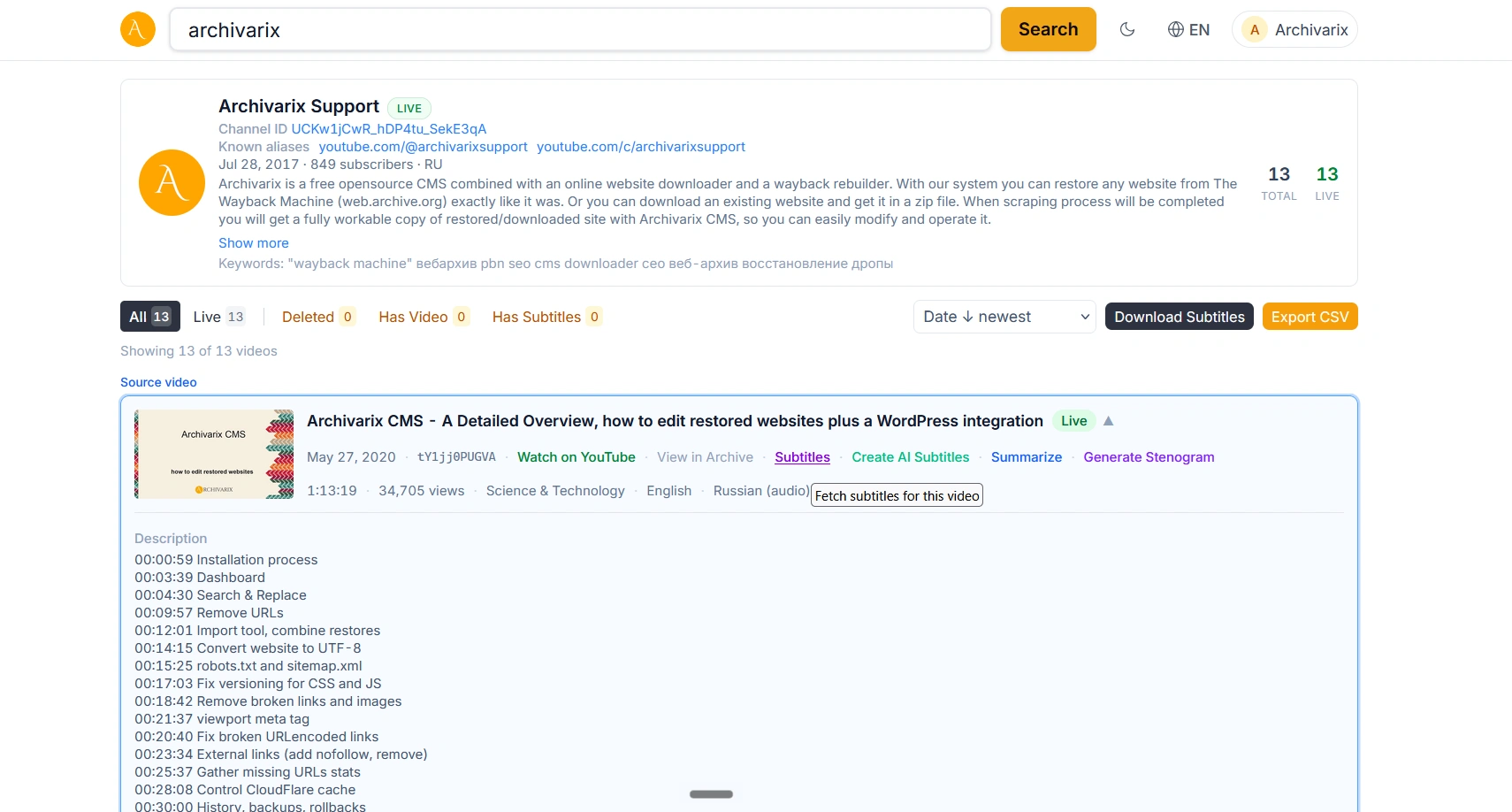
How to Download YouTube Subtitles, Even from Deleted Videos
You found the video you needed on YouTube, but you do not want to watch the whole thing just for a couple of lines. Or you need the text of a lecture to translate it, quote it, or simply skim through it. YouTube subtitles solve this, but copying them from the site itself is not easy: the interface gives you no download button, and third-party services often break or ask for payment. Archivarix Tube Search has a simple way to get the subtitles of any video, and more importantly, it works even for clips that have already been removed from YouTube.
Read more…
How long does a web page live: what the research says about link rot
Open any article from a decade ago and click through the links in it. There is a good chance that some of them lead nowhere. Instead of the page you wanted, you get a 404 error, a parked domain advertising cheap insurance, or a redirect to someone else's site. This phenomenon is called link rot, and it is far more widespread than people tend to assume.
Read more…
How the Internet Archive Decides What to Archive: Priorities, Frequency, and Data Sources
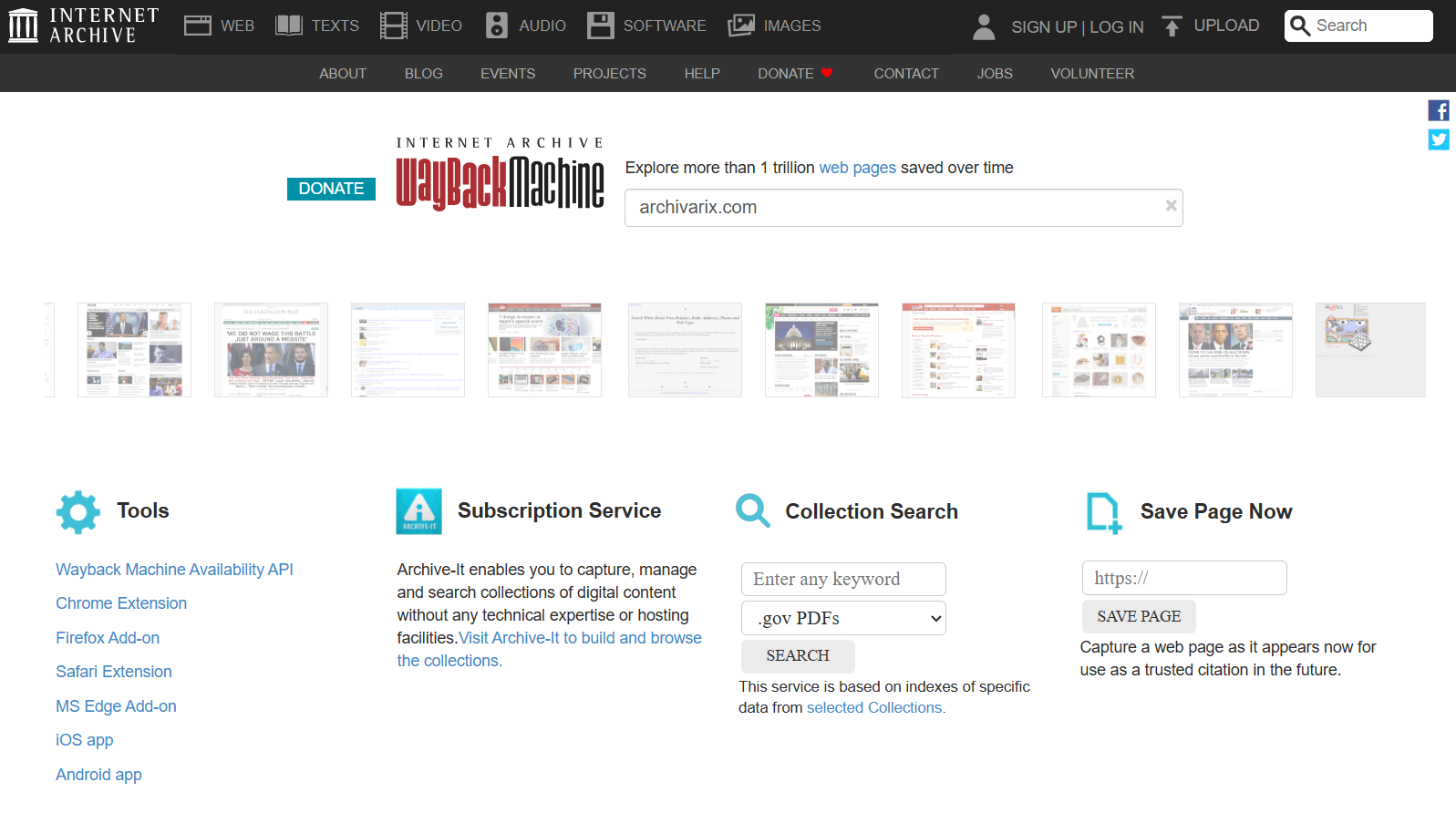
One trillion saved pages. Over 99 petabytes of data. Hundreds of crawls running simultaneously every day. Behind these numbers lies a question that everyone who professionally works with web archives asks themselves: how exactly does the Wayback Machine decide which sites to scan, how often to return to them, and why are some domains represented in the archive with thousands of snapshots while others have only a few records over ten years?
Understanding these mechanisms is critically important for anyone involved in website restoration. If you know how the system works from the inside, you can predict what you'll find in the archive and what won't be there. And you can influence the archiving of your own sites while they're still live.
Read more…
Understanding these mechanisms is critically important for anyone involved in website restoration. If you know how the system works from the inside, you can predict what you'll find in the archive and what won't be there. And you can influence the archiving of your own sites while they're still live.
Web Archive in 2026: What Has Changed and How It Affects Website Restoration
In October 2025, the Wayback Machine reached the milestone of one trillion archived web pages. Over 100,000 terabytes of data. This is a massive achievement for a nonprofit organization that has been operating since 1996. But behind this impressive number lies a difficult period that Internet Archive has gone through over the past year and a half. Cyberattacks, lawsuits, changes in access policies, and new challenges from AI companies - all of this directly affects those who use the web archive for website restoration.
Read more…
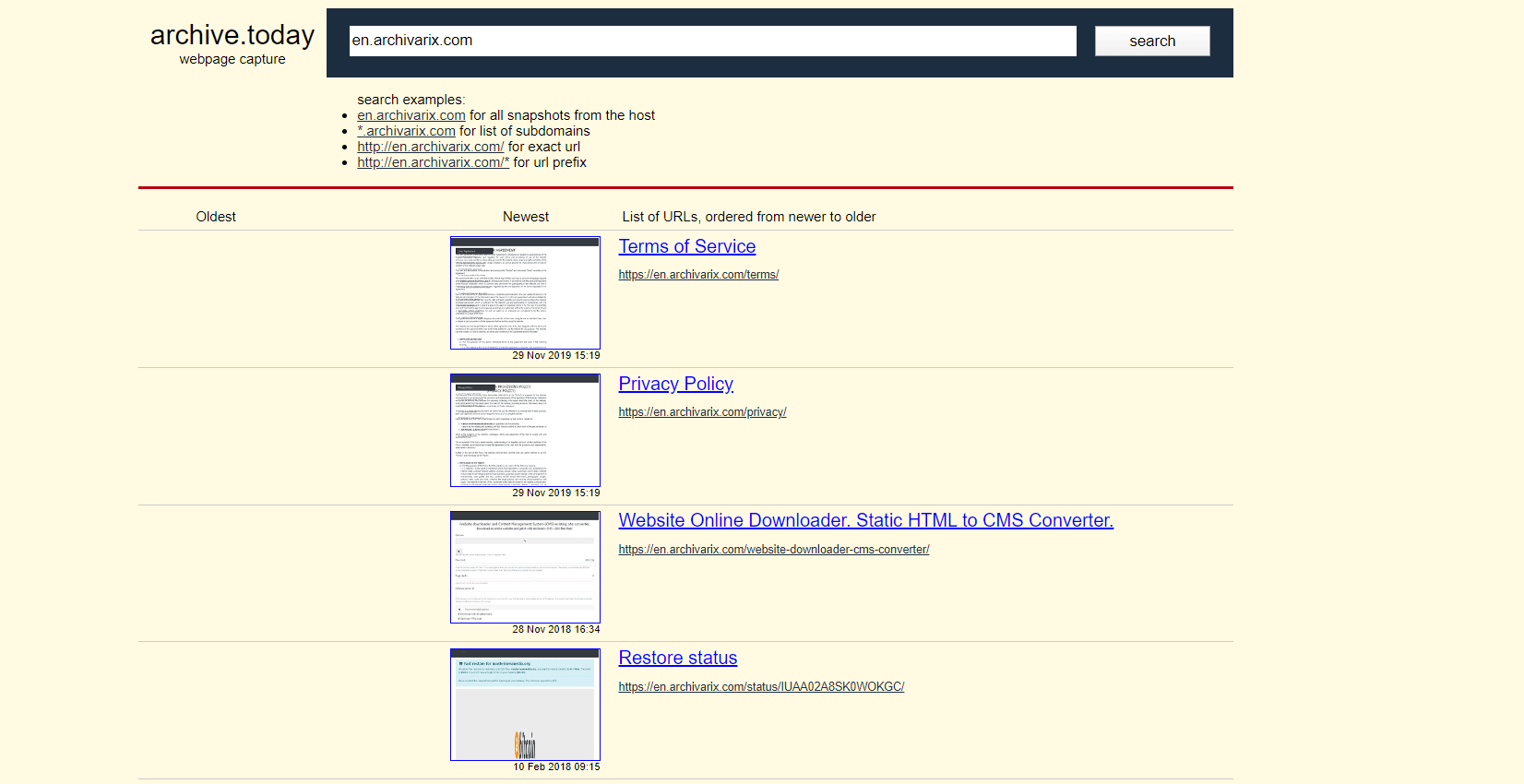
Best Wayback Machine alternatives. How to find deleted websites.
The Wayback Machine is the famous and biggest archive of websites in the world. It has more than 400 billion pages on their servers. Is there any archiving services like Archive.org?
Read more…
